Introduction to Salary Negotiation
Read at your own pace. Code execution, quizzes, progress tracking, and the AI tutor are available in the interactive view with JavaScript enabled.
Welcome To Negotiation
Why this lesson matters
Salary negotiation is not a rare, awkward exception in your career. It is a normal professional conversation about how your work, responsibilities, market conditions, and employer needs line up.
Because this is the first lesson, we are setting the foundation: what salary negotiation is, why it matters, and which myths can quietly cost you money or options.
As an experienced developer, you already know that small decisions compound: architecture choices, technical debt, code review standards. Compensation works the same way. One conversation can affect not just this year, but the baseline for future raises, bonuses, and offers.
In later lessons, we will get specific about research, personal ranges, communication, equity, international context, and follow-up. For now, we are building the mindset.

What Negotiation Is
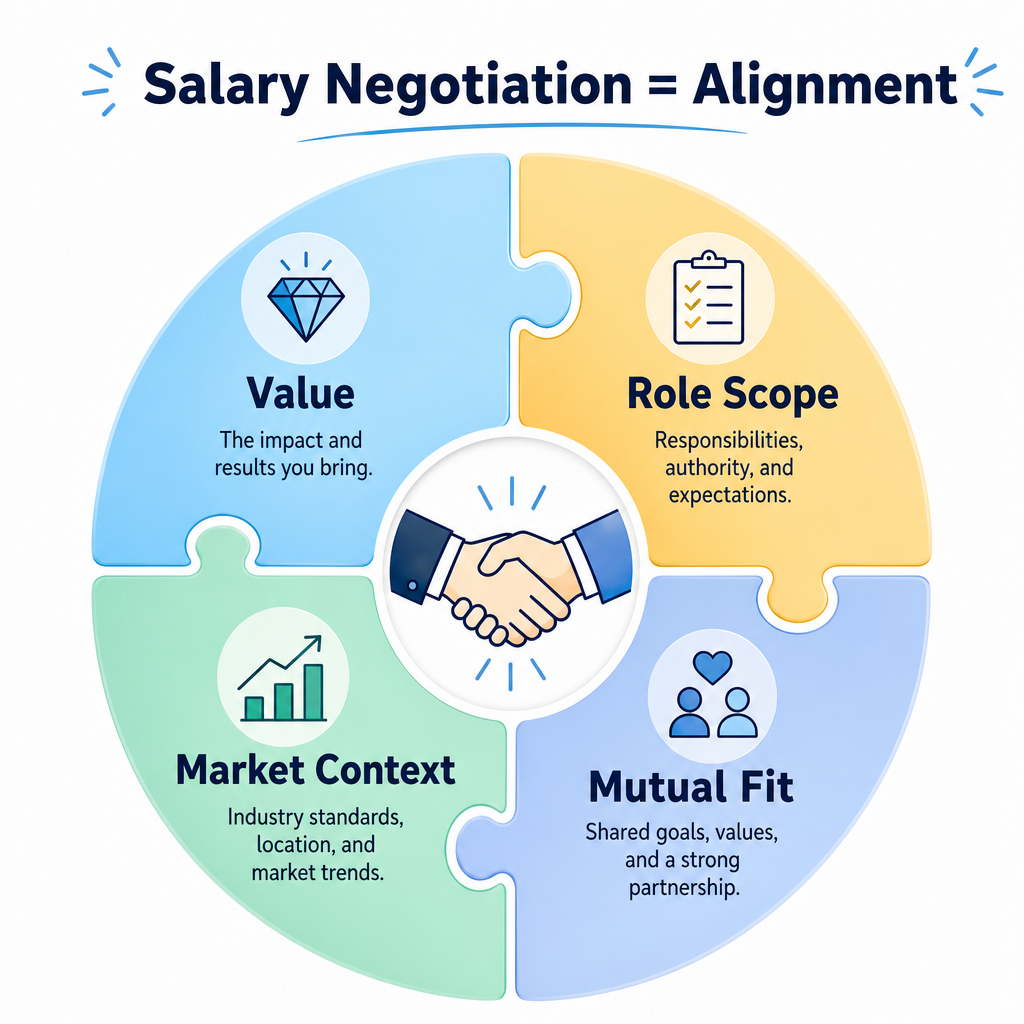
Negotiation is alignment
A useful definition:
Salary negotiation is a structured conversation to align compensation with value, role expectations, market context, and mutual fit.
It is not:
- Begging
- Threatening
- Winning at someone else's expense
- Proving you are a better person than another candidate
It is closer to debugging a production issue: both sides have constraints, incomplete information, and a shared interest in a stable outcome.
Think of it like a contract extension for a key Steelers player or a Knicks rotation decision. The question is not simply, “Who deserves what?” The better question is, “Given the role, impact, alternatives, and timing, what agreement makes sense?”
Spot The Myth
Which statement is the biggest misconception about salary negotiation?
Small Gaps Compound
Why negotiation can change your career math
A salary difference can become a long-running baseline. Raises are often calculated as a percentage of current salary, so two people with similar performance can drift apart over time if they start from different numbers.
This does not mean every negotiation will produce a huge increase. It means the upside can be larger than the single conversation feels in the moment.
Here is a simple C++ model of two starting salaries with the same annual raise rate.
```cpp
#include <iostream>
#include <iomanip>
using namespace std;

int main() {
    double salaryA = 120000; // accepted without negotiating
    double salaryB = 128000; // negotiated starting point
    double raiseRate = 0.04;
    double totalA = 0, totalB = 0;

    cout << fixed << setprecision(2);
    cout << "Year | No negotiation | Negotiated\n";
    cout << "-------------------------------\n";

    for (int year = 1; year <= 5; ++year) {
        totalA += salaryA;
        totalB += salaryB;
        cout << year << "    | $" << salaryA << "      | $" << salaryB << "\n";
        salaryA *= (1 + raiseRate);
        salaryB *= (1 + raiseRate);
    }

    cout << "\nFive-year difference: $" << (totalB - totalA) << "\n";
    return 0;
}
```
Already Enough?
True or false: If an offer is higher than your current salary, negotiating is unnecessary.
Common Misconceptions
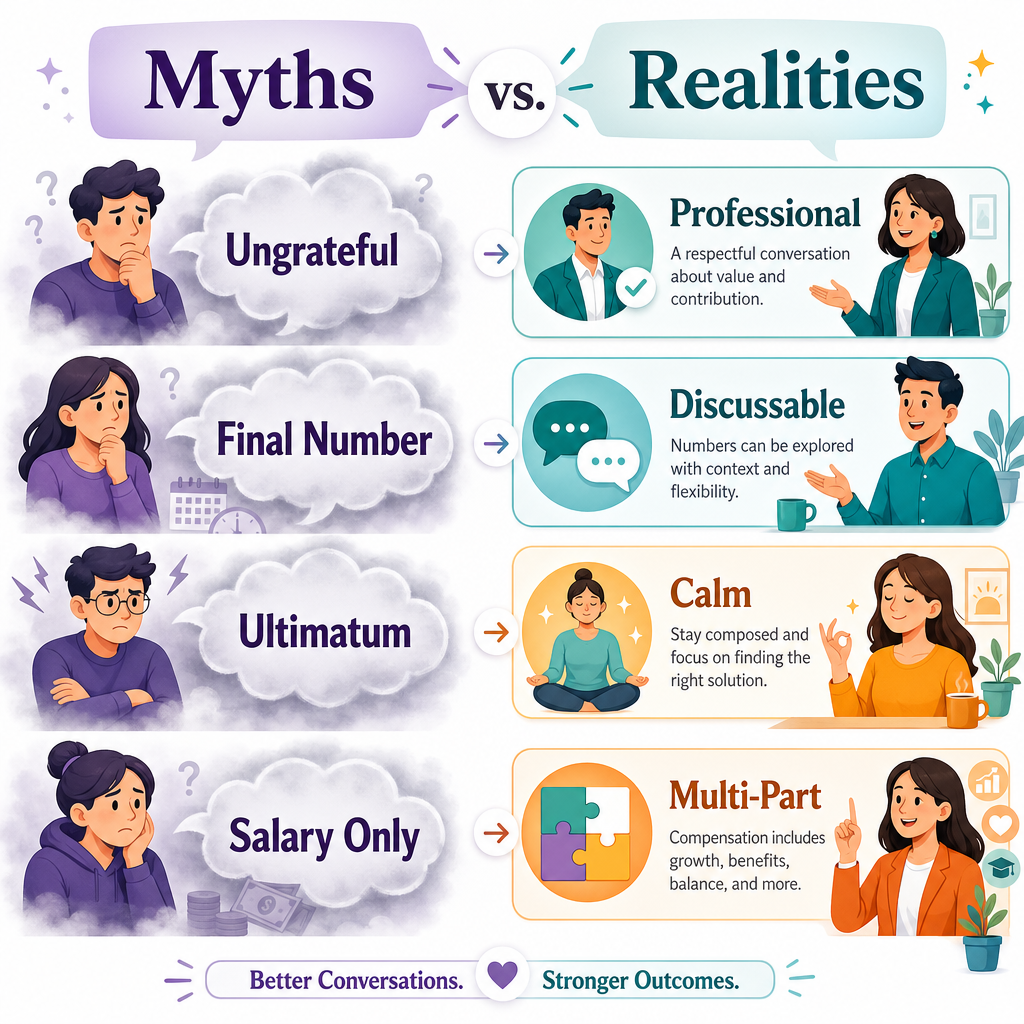
Myths that make people under-ask
Salary negotiation often feels intimidating because people carry hidden assumptions into the conversation.
Myth 1: “If I negotiate, they will think I am ungrateful.”
A respectful negotiation usually signals professionalism, not arrogance. Employers expect experienced candidates and employees to ask thoughtful questions.
Myth 2: “The first number is the final number.”
Sometimes it is. Often it is not. The only way to know is to engage professionally.
Myth 3: “I need a dramatic ultimatum.”
You do not need a Stephen King cliffhanger. Most strong negotiations are calm, specific, and grounded in business value.
Myth 4: “Negotiation is only about base salary.”
Base salary matters, but agreement can also involve timing, role scope, bonus structure, title, flexibility, relocation, professional development, or other terms. We will keep this lesson high-level and go deeper later.
Complete The Idea
Fill in the blank:
Salary negotiation is a conversation about _____, not a fight over personal worth.
Beyond One Number
Compensation is a package
Intro-level mistake: treating the offer as one number and stopping there.
A better mental model is a package with several parts. You do not need to negotiate every part, and not every employer can move every lever. But recognizing the package helps you ask clearer questions.
At a high level, first-year cash might include base salary plus a signing bonus. This is not the whole story, but it shows why reading the full offer matters.
```cpp
#include <iostream>
#include <string>
using namespace std;

struct Offer {
    string company;
    int baseSalary;
    int signingBonus;
};

int firstYearCash(const Offer& offer) {
    return offer.baseSalary + offer.signingBonus;
}

int main() {
    Offer a{"Offer A", 150000, 0};
    Offer b{"Offer B", 145000, 12000};

    cout << a.company << " first-year cash: $" << firstYearCash(a) << "\n";
    cout << b.company << " first-year cash: $" << firstYearCash(b) << "\n";

    if (firstYearCash(b) > firstYearCash(a)) {
        cout << "Offer B has higher first-year cash, despite lower base salary.\n";
    }

    return 0;
}
```
Best First Move
You receive an offer that feels exciting but slightly lower than expected. What is the best first move?
Your Negotiation Mindset
The foundation for the course
Before tactics, scripts, or numbers, adopt this mindset:
- Negotiation is normal. You are allowed to ask.
- Professional tone matters. Calm beats dramatic.
- Preparation creates confidence. You do not need to improvise.
- Compensation has context. Role, market, impact, and constraints all matter.
- Good outcomes are mutual. The goal is an agreement both sides can stand behind.
For a senior developer, this is similar to a strong design review: you bring evidence, explain tradeoffs, listen carefully, and move toward a decision.
Next, we will begin the preparation phase by looking at how to research salary ranges without relying on guesswork.