Recording Skills and Studio Etiquette
Read at your own pace. Code execution, quizzes, progress tracking, and the AI tutor are available in the interactive view with JavaScript enabled.
From Setup To Session
Why this lesson matters
In Building Your Voiceover Studio, you created a capture space and a basic signal chain. Now we move from owning the setup to using it like a pro.
Recording skill is not just sounding good. It is the ability to deliver clean, repeatable, usable audio while staying calm, coachable, and organized.
Think of it like stepping into the booth the way a vocalist steps into the pocket of a hip hop or R&B track:
- You respect timing.
- You control energy.
- You leave space.
- You listen before you perform.
By the end of this lesson, you will have a simple session rhythm: prepare, record, label, respond, reset. Next lesson, we will use those clean recordings for basic audio editing.

The Recording Loop
Pros repeat the same loop
A beginner often thinks, “I press record and talk.” A working voice actor thinks in a loop:
Check room → Check levels → Perform take → Mark result → Reset body → Repeat
This loop keeps you from chasing perfection randomly. It gives every take a purpose.
A good recording session has three kinds of control:
- Technical control: levels, distance, noise, file names
- Performance control: pacing, intention, breath, emphasis
- Professional control: listening, taking direction, staying respectful
Here is the loop as a tiny JavaScript model.
```javascript
const recordingLoop = [
  'Check room noise',
  'Set mic distance and angle',
  'Record a focused take',
  'Mark the best take or issue',
  'Reset breath and posture'
];

recordingLoop.forEach((step, index) => {
  console.log(`${index + 1}. ${step}`);
});

console.log('Session mindset: repeatable beats random.');
```
Mic Geometry
Your mic hears placement
Mic technique is how you physically perform for the microphone, not just near it.
Use this starter position:
- Place your mouth about 6–8 inches from the mic.
- Aim your voice slightly past the mic, not directly into it.
- Use a pop filter between you and the capsule.
- Stay consistent when the script gets louder or softer.
Common problems
Problem Likely cause Better habit Popping P and B sounds Air hitting the capsule Angle off-axis and use a pop filter Boomy sound Too close to the mic Back up slightly Thin sound Too far away or low energy Move closer and support the read Uneven volume Moving around while reading Plant feet and keep a steady positionYour goal is not to freeze like a statue. It is to move with awareness, like staying in the pocket of a beat.
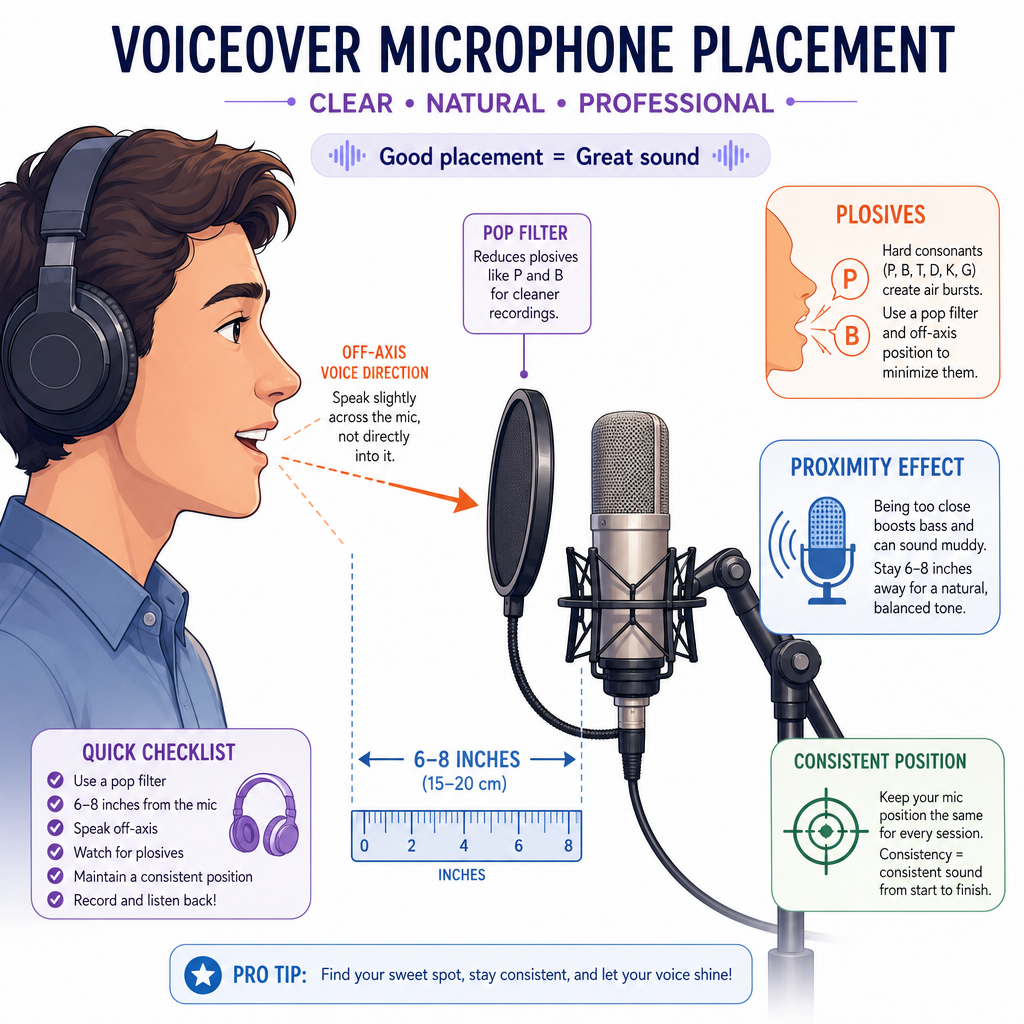
Plosive Fix
You hear strong popping blasts on words like “power,” “brand,” and “people.” What is the best first fix during recording?
Take Discipline
Record with intention
A take is not just “another try.” Each take should test something specific.
For example:
- Take 1: natural read
- Take 2: warmer and more conversational
- Take 3: tighter timing, more commercial energy
- Pickup: only the line that had a mistake
This is especially useful when working from home because you may not have a director in your ear. You become your own calm session manager.
Do not over-record until your voice gets tired. Three focused takes usually beat twelve unfocused ones.
```javascript
const takes = [
  { take: 1, style: 'natural', note: 'good tone, slow ending' },
  { take: 2, style: 'warm conversational', note: 'best overall' },
  { take: 3, style: 'higher energy', note: 'too rushed' },
  { take: 'pickup', style: 'line 4 only', note: 'fixed product name' }
];

const best = takes.find(item => item.note.includes('best'));

console.log('Session take log:');
takes.forEach(item => console.log(`Take ${item.take}: ${item.style} — ${item.note}`));
console.log(`Send candidate: Take ${best.take}`);
```
One Take Myth
True or false: A professional voice actor should always deliver a perfect read in one take, and needing multiple takes makes you look unprepared.
Studio Etiquette
Etiquette is part of the sound
Studio etiquette is how you behave before, during, and after recording. Even in a home booth, clients notice your habits.
Before recording
- Show up early to test your setup.
- Silence notifications, fans, pets, and background distractions.
- Read the script before the session starts.
- Confirm pronunciation questions.
During recording
- Listen fully before defending a choice.
- Take direction with a simple: “Got it, let me try that.”
- Avoid arguing about the copy unless there is a real issue.
- Do not talk over the director, engineer, or client.
After recording
- Confirm what they need from you next.
- Keep your file names clear.
- Thank people for the session.
A great attitude can get you rehired even before you have the most expensive gear.
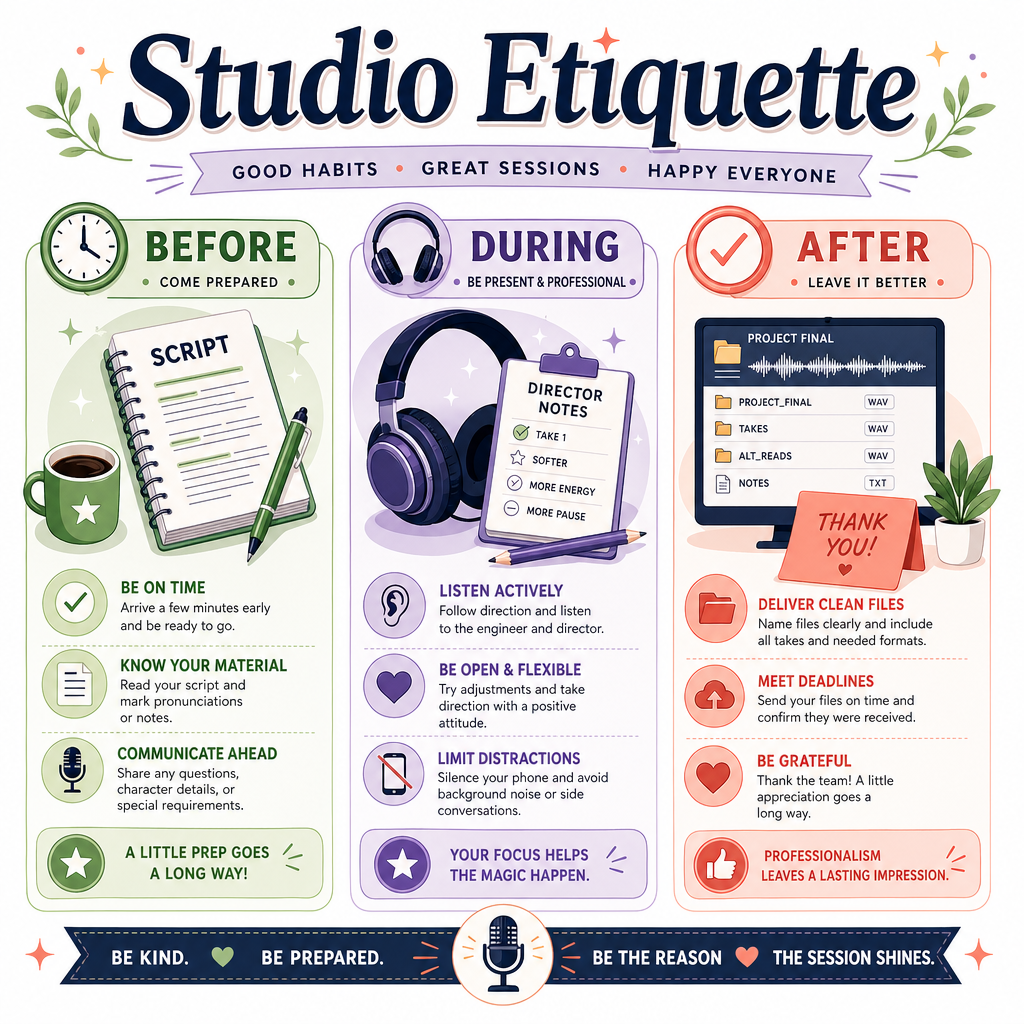
Direction Response
A client says, “Can we make it more relaxed, less announcer, like you are talking to one person?” What is the most professional response?
Preflight Checklist
Check before you perform
A preflight checklist prevents avoidable problems. You do it before the emotional part of the read, so your brain is not juggling everything at once.
Use a short checklist before every session:
- Room is quiet
- Mic is in the same position
- Headphones are connected
- Levels are safe, not clipping
- Script is marked
- Water is nearby
- File name is ready
The point is not to become robotic. It is to protect your creativity so your read can feel melodic, human, and present.
```javascript
const preflight = {
  roomQuiet: true,
  micPositioned: true,
  headphonesConnected: true,
  levelsSafe: true,
  scriptMarked: true,
  waterNearby: true,
  fileNameReady: false
};

const missing = Object.entries(preflight)
  .filter(([task, done]) => !done)
  .map(([task]) => task);

if (missing.length === 0) {
  console.log('Ready to record.');
} else {
  console.log('Not ready yet. Check:');
  missing.forEach(task => console.log(`- ${task}`));
}
```
Silence Capture
Before or after a take, record a few seconds of your booth’s natural silence. This is called ____.