Dry Run Algorithms With Trace Tables
Read at your own pace. Code execution, quizzes, progress tracking, and the AI tutor are available in the interactive view with JavaScript enabled.
Why Trace Tables
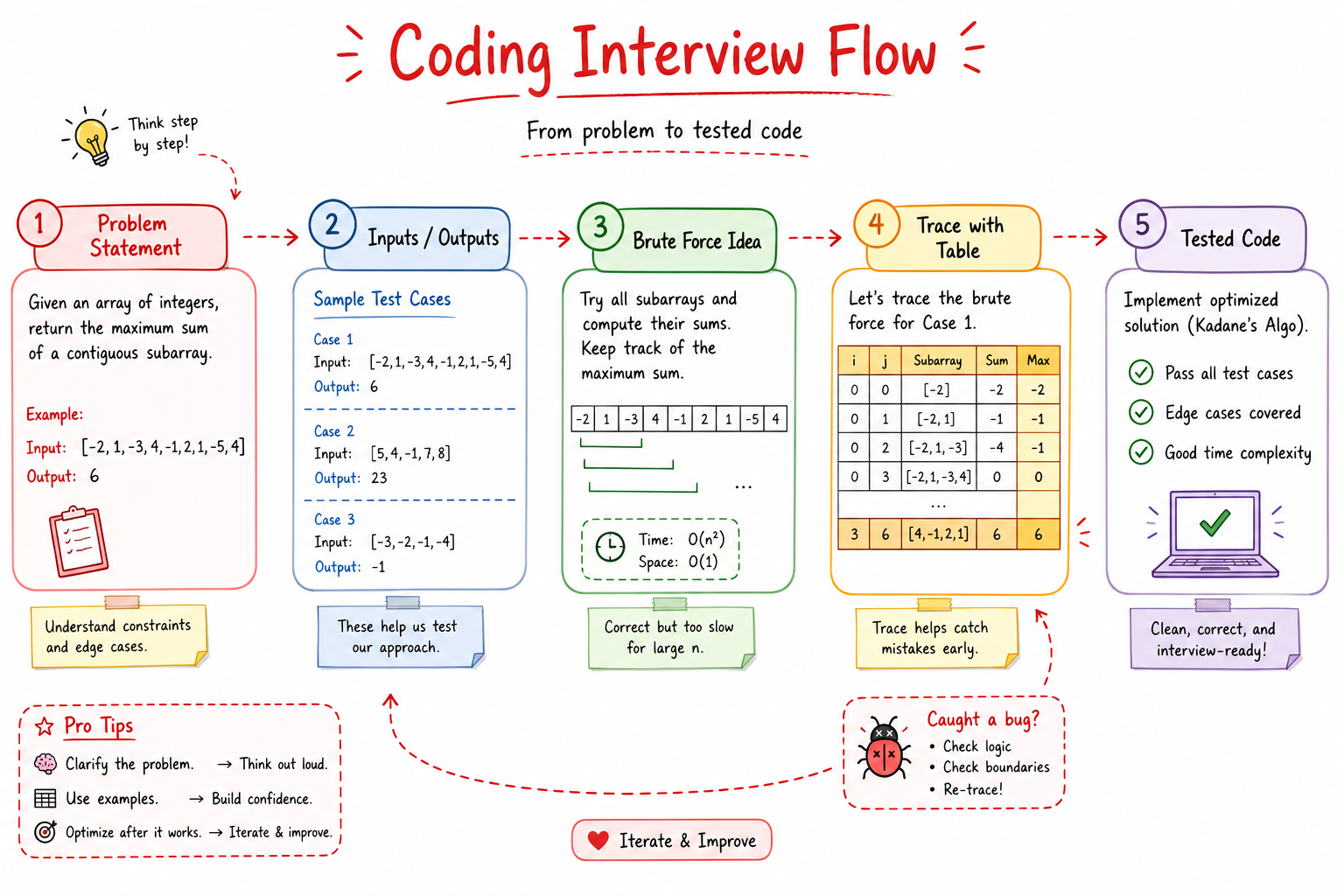
Now that you've practiced turning problem statements into inputs and outputs in Turn Problem Statements Into Inputs and Outputs, and you've seen why brute force is a useful starting point in Coming Up With Brute Force Algorithms With Examples, we're ready for the next skill: proving to yourself that the algorithm actually works.
A dry run is a manual simulation of code.
A trace table is the written record of that simulation.
Instead of saying, "I think this works," you walk through a small input and record what changes at every meaningful step.
This is especially useful when you're nervous, debugging, or explaining your solution to an interviewer.
CONTINUE WITH ALGODAILY PREMIUM
Keep going with the complete tutorial.
Unlock the remaining explanations and exercises, alongside the full learning library.
Explore Premium →