Framing an ML Problem
Read at your own pace. Code execution, quizzes, progress tracking, and the AI tutor are available in the interactive view with JavaScript enabled.
Why Framing Matters
Framing an ML Problem
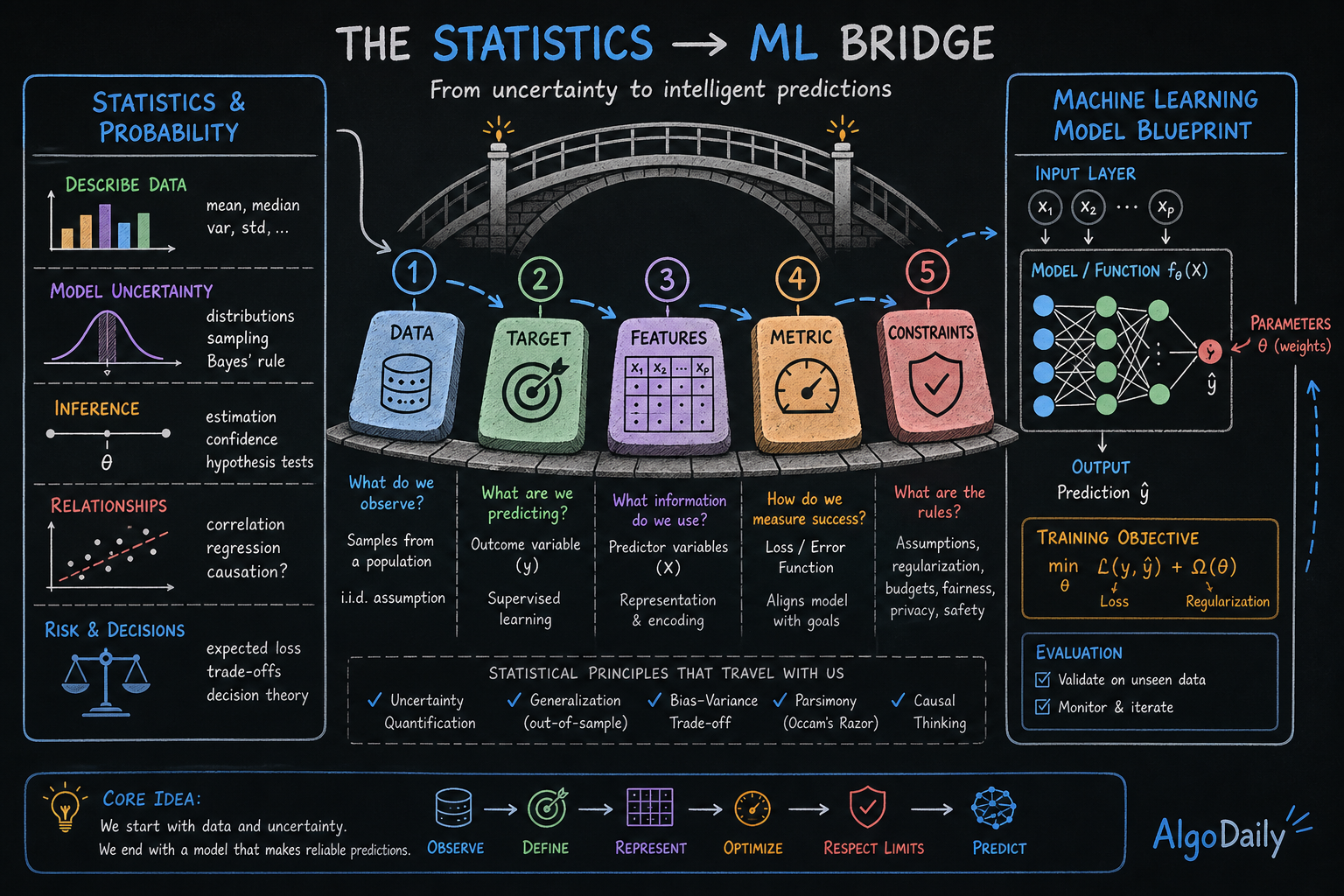
Now that we have covered the mental model of ML in Introduction to Machine Learning, set up our Python tooling in Python ML Environment Setup, and learned basic statistics in Understanding the Data: Statistics, we are ready for the question that comes before every model:
What exactly are we asking the machine to learn?
For software engineers, think of this as writing an API contract before implementation. A vague request like make the app smarter is not enough. A framed ML problem says:
- what prediction or pattern we want
- what data is available
- what output the model should produce
- how we will know if it is useful
This lesson closes the Orientation and Math section. After this, the course moves into the data toolkit, starting with All About NumPy and Pandas.
CONTINUE WITH ALGODAILY PREMIUM
Keep going with the complete tutorial.
Unlock the remaining explanations and exercises, alongside the full learning library.
Explore Premium →