How Hash Tables Work: Hash Functions, Collisions, and Resizing
Read at your own pace. Code execution, quizzes, progress tracking, and the AI tutor are available in the interactive view with JavaScript enabled.
Why Hash Tables
Why Hash Tables
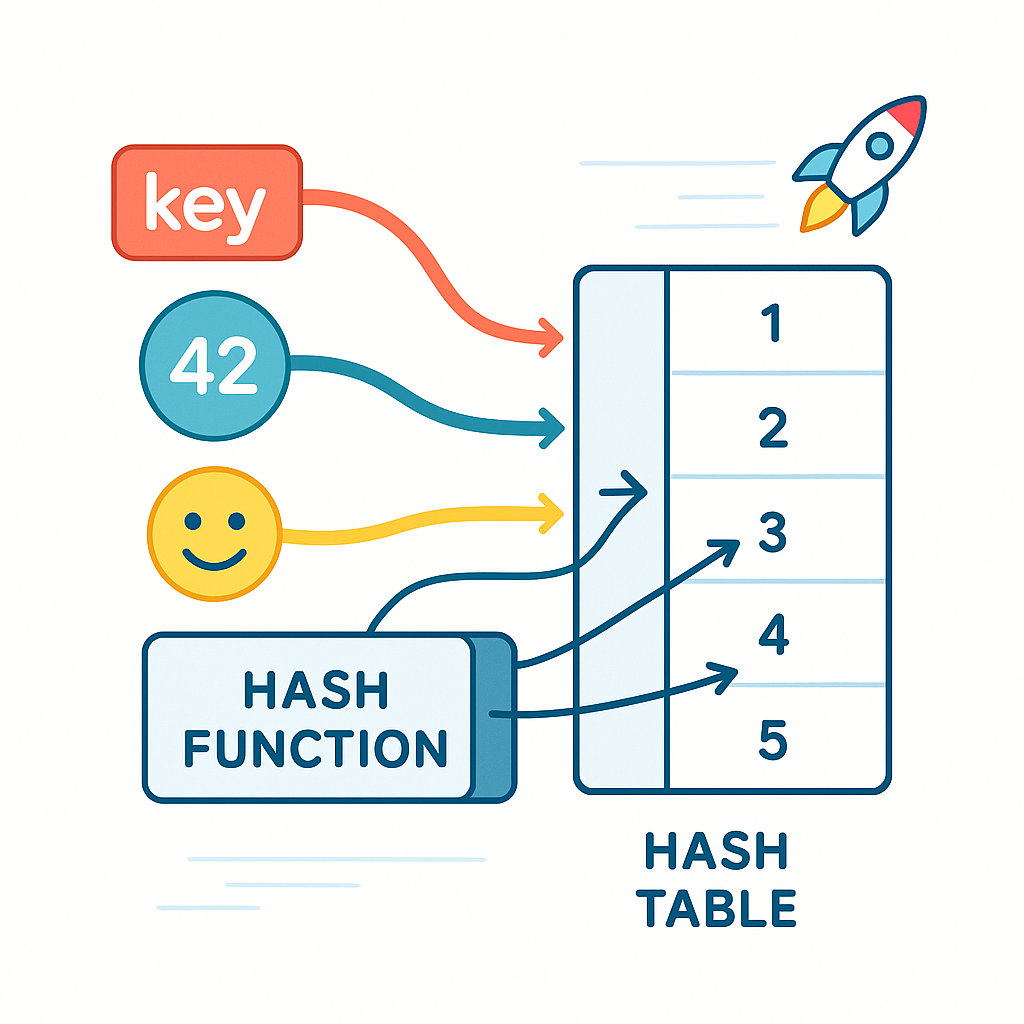
Hash tables are the fast-and-furious workhorse of data structures. Need to store and find things in near constant time? A hash table is your new best friend. They power dict and set in Python, key–value stores in databases, and a shocking amount of “why is this code so fast?” moments.
In interviews, they’re the Swiss Army knife: simple to describe, subtle to implement, and full of landmines (the fun kind). Today we’ll learn how hash functions, collisions, and resizing work—so you can build one, tune one, and explain one with the calm confidence of someone who slept eight hours.
CONTINUE WITH ALGODAILY PREMIUM
Keep going with the complete tutorial.
Unlock the remaining explanations and exercises, alongside the full learning library.
Explore Premium →